
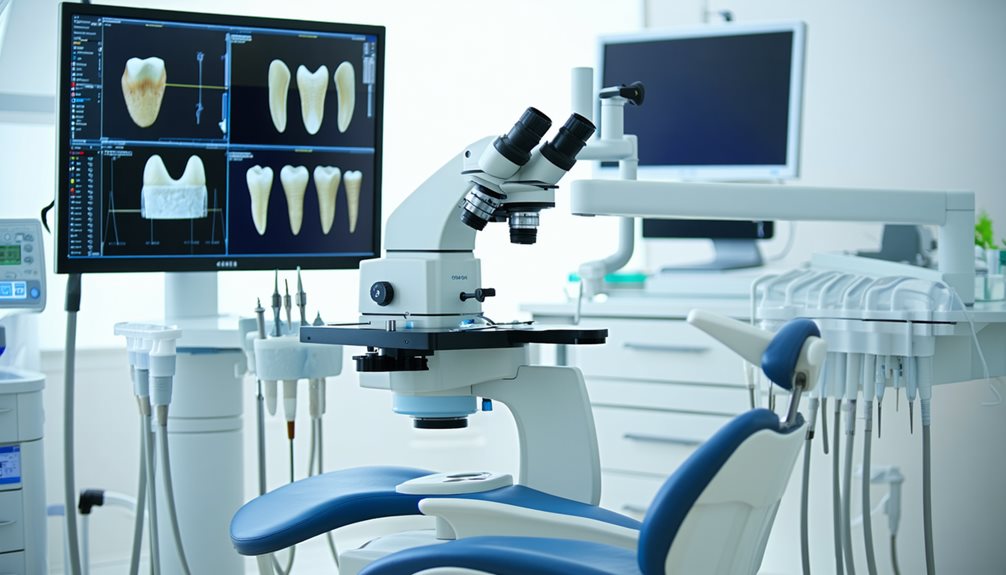
High-tech endodontic equipment is essential for superior treatment outcomes. Selecting high-quality devices, updated via manufacturer collaboration, and performing regular cost-benefit analyses guarantees peak performance and longevity. Adoption of advanced imaging, like CBCT, refines diagnosis and treatment planning through enhanced visualization. Implementing digital workflows and automation elevates clinical precision and efficiency, streamlining operations and reducing errors. Real-time monitoring enhances procedural accuracy, while fostering patient confidence. Continuous professional development is key to staying at the forefront of technological advancements, assuring top-tier patient care. Those who explore these strategies further will uncover ways to greatly enhance their practice.
Choosing the Right Equipment
Selecting appropriate endodontic equipment is essential for achieving successful treatment outcomes and maintaining high standards of patient care. In the domain of endodontics, where precision is paramount, the choice of equipment is a vital determinant of clinical success and efficiency.
Equipment quality should be prioritized, as high-grade materials and advanced manufacturing techniques directly influence the performance and longevity of the instruments. Practitioners seeking to innovate must consider the latest advancements in endodontic technology, ensuring their tools are compatible with contemporary practices and can deliver superior results.
Cost considerations also play a significant role in the decision-making process. While premium equipment may demand a higher initial investment, it frequently offers enhanced durability and reduced maintenance costs, ultimately proving to be more economical over time.
It is important to balance equipment quality with budgetary constraints, ensuring that financial resources are allocated efficiently without compromising patient care standards.
Furthermore, evaluating the supplier’s reputation and the availability of technical support can safeguard against potential operational disruptions.
Enhancing Precision and Accuracy
Enhancing precision and accuracy in endodontic procedures is greatly achieved through the integration of advanced imaging techniques, digital workflows, and real-time monitoring systems.
The use of high-resolution imaging enables clinicians to obtain detailed visualizations, facilitating precise diagnosis and treatment planning.
Additionally, the incorporation of digital workflows streamlines clinical processes, while real-time monitoring provides immediate feedback, enhancing the overall quality of patient care.
Advanced Imaging Techniques
How do advanced imaging techniques revolutionize the field of endodontics, enhancing both precision and accuracy in diagnostic and treatment procedures? The advent of 3D imaging and intraoral scanning has considerably transformed endodontic practice by providing unprecedented insights into root canal morphology and pathology.
These technologies enable clinicians to visualize complex anatomical details that were previously challenging to discern using traditional radiography. By integrating these advanced imaging techniques, endodontists can plan and execute treatments with increased confidence and precision, reducing the margin for error.
To highlight the notable advantages of these technologies, consider the following key points:
-
Enhanced Visualization: 3D imaging offers a thorough view of the tooth structure, allowing for detailed examination of the root canal system, facilitating accurate diagnosis and treatment planning.
-
Real-Time Data: Intraoral scanning provides instant, precise digital impressions, enhancing the workflow efficiency and ensuring accurate restorative procedures.
-
Reduced Patient Exposure: Advanced imaging techniques minimize the need for multiple radiographs, greatly reducing patient exposure to ionizing radiation.
-
Improved Outcomes: By leveraging these technologies, clinicians can achieve more predictable treatment outcomes, enhancing patient satisfaction and clinical success rates.
Digital Workflow Integration
Integrating digital workflows into endodontic practice considerably enhances both precision and accuracy in diagnostics and treatment delivery. By leveraging digital integration strategies, endodontic professionals can achieve a seamless shift from patient assessment to intervention. This integration involves the utilization of advanced software and hardware solutions that connect various aspects of the clinical process. Such strategies guarantee that practitioners have access to thorough data at every stage, facilitating informed decision-making and minimizing errors.
Emphasizing workflow optimization techniques, digital workflows streamline processes by automating routine tasks and reducing the potential for human error. Implementing these techniques allows practitioners to efficiently manage patient records, imaging data, and treatment plans within a unified digital ecosystem. This not only enhances clinical accuracy but also improves overall practice efficiency, enabling clinicians to focus more on patient care.
Furthermore, digital integration enhances collaboration among multidisciplinary teams. Shared digital platforms allow for the effortless exchange of information, fostering better communication and coordination.
With these innovations, practitioners can provide highly personalized and precise endodontic care, adapting swiftly to the dynamic demands of modern dentistry. Ultimately, embracing digital workflow integration positions endodontic practices at the forefront of technological advancement, driving superior clinical outcomes and elevating patient satisfaction.
Real-Time Monitoring Benefits
Real-time monitoring systems in endodontics offer considerable benefits, particularly in enhancing precision and accuracy during procedures. By providing clinicians with real-time feedback, these systems guarantee that every step of the treatment is meticulously guided and adjusted to achieve ideal results.
Such technology employs performance analytics to track and interpret data, enabling practitioners to make informed decisions swiftly. This integration of advanced monitoring tools not only elevates the quality of care but also greatly reduces the likelihood of procedural errors.
Key advantages of real-time monitoring in endodontics include:
-
Enhanced Precision: Continuous feedback allows for immediate adjustments, guaranteeing that instruments are used with ideal accuracy and efficiency.
-
Improved Safety: By providing real-time data, these systems help in preventing potential complications, thereby safeguarding patient health during complex procedures.
-
Performance Analytics: Detailed analysis of procedural data aids in refining techniques and strategies, contributing to ongoing professional development and improved treatment outcomes.
-
Patient Confidence: The use of cutting-edge technology reassures patients of the high-quality care they are receiving, fostering trust and satisfaction.
Innovations in Imaging Technology
Advancements in imaging technology are revolutionizing endodontic practices by enhancing diagnostic accuracy and treatment outcomes. The integration of cutting-edge 3D imaging systems into endodontic diagnostics offers unprecedented clarity and detail, allowing practitioners to visualize intricate root canal anatomies with precision.
These imaging modalities, such as Cone Beam Computed Tomography (CBCT), provide extensive insights that surpass traditional two-dimensional radiographs. The ability to view complex structures in three dimensions enhances the accuracy of initial assessments, facilitating more informed decision-making processes.
3D imaging is not merely a diagnostic tool; it is a transformative innovation that redefines treatment planning and execution. By providing a volumetric perspective, practitioners can identify and address complications such as calcified canals, resorptions, or root fractures that might otherwise remain undetected.
This advanced visualization supports a more tailored approach to endodontic therapy, resulting in improved patient outcomes.
Moreover, the evolution of imaging technology in endodontics extends beyond mere visualization. Cutting-edge software platforms now integrate with these imaging systems, enabling seamless manipulation and analysis of the data.
This synergy between hardware and software equips endodontic professionals with the tools necessary to elevate the standard of care, ultimately fostering a more efficient and effective clinical workflow.
Streamlining Workflow With Automation
Incorporating automation in endodontic practices considerably enhances efficiency and precision by systematically managing repetitive tasks and standardizing procedures.
This technological advancement reduces human error, leading to more consistent treatment outcomes and improved accuracy in complex procedures.
Additionally, automated systems contribute to optimizing the patient experience by minimizing treatment time and ensuring a streamlined workflow.
Enhancing Efficiency and Precision
Automation technology in endodontics is revolutionizing dental practices by enhancing both efficiency and precision in procedures.
By automating routine tasks, endodontists can focus more on complex decision-making, thereby elevating the quality of care.
Here are four ways automation is transforming endodontic practices:
-
Automated Scheduling and Patient Management: Systems automatically manage appointments and patient records, minimizing administrative burdens and allowing practitioners to devote more time to patient care.
-
Robotic-Assisted Instrumentation: With precision-guided tools, endodontists achieve greater accuracy and reduce treatment times, enhancing patient outcomes and satisfaction.
-
Digital Imaging and Diagnostics: Advanced imaging systems offer real-time data integration, enabling precise diagnosis and treatment planning, greatly improving workflow efficiency.
-
Predictive Maintenance and Equipment Monitoring****: Automated systems for equipment maintenance predict potential failures, ensuring ideal performance and minimizing downtime, which is vital for uninterrupted service delivery.
Reducing Human Error
Building on the enhanced efficiency and precision offered by automation in endodontics, reducing human error is another significant benefit that automation brings to dental practices. The integration of advanced technologies addresses human factors by minimizing the potential for mistakes that can arise from manual processes.
Automated systems in endodontics, such as digital imaging and electronic apex locators, streamline workflows by providing consistent, reliable data, consequently enhancing error prevention.
Incorporating automation into endodontic procedures mitigates variability introduced by human intervention. For instance, automated endodontic motors with preset torque and speed settings reduce the likelihood of over-instrumentation, a common error in manual procedures.
Additionally, these systems allow for real-time feedback and adjustments, further ensuring ideal outcomes. By reducing reliance on human memory and manual dexterity, automation facilitates a more controlled and predictable treatment environment.
Furthermore, automation in endodontics aids in error prevention through standardized protocols and checklists embedded within software systems. These tools guide practitioners step-by-step, ensuring adherence to best practices and reducing cognitive load.
Ultimately, embracing automation not only enhances procedural accuracy but also fosters a culture of safety and reliability in dental practices, aligning with the goals of modern, innovative dentistry.
Optimizing Patient Experience
Streamlining workflows through automation in endodontics markedly enhances the patient experience by reducing treatment times and increasing procedural efficiency.
As dental practices integrate advanced technologies, they leverage automation to optimize both clinical and administrative processes. This not only elevates overall performance but also fosters improved patient communication and satisfaction through transparent and timely interactions.
By employing innovative feedback mechanisms, endodontic professionals can confirm that patient concerns are swiftly addressed, thereby reinforcing trust and engagement.
Key aspects of automation in endodontics include:
-
Automated Appointment Scheduling: Implements intelligent systems for seamless appointment coordination, minimizing wait times and optimizing chairside availability.
-
Digital Imaging and Diagnostics: Utilizes cutting-edge imaging technologies to enhance diagnostic accuracy, expediting treatment decisions and facilitating effective patient communication.
-
Electronic Health Records (EHR) Management: Streamlines patient data management, confirming quick access to thorough records and enhancing the accuracy of treatment planning.
-
Patient Feedback Systems: Incorporates automated feedback mechanisms to capture patient insights post-treatment, enabling practices to refine service delivery continuously.
Ensuring Patient Comfort
Patient comfort is a paramount consideration in endodontic procedures, as it greatly influences the overall experience and outcome of the treatment. Modern technological advancements provide numerous comfort measures that guarantee a seamless procedure.
Incorporating patient feedback into the selection and utilization of these technologies is essential. Feedback mechanisms, such as post-procedure surveys, allow practitioners to fine-tune techniques and equipment choices, enhancing patient satisfaction.
High-tech endodontic equipment, including ultrasonics and digital imaging, minimizes discomfort by offering precision and reducing treatment time. Devices equipped with noise-dampening technology address auditory discomfort, while ergonomic handpieces decrease operator fatigue, indirectly benefiting the patient.
Moreover, the use of advanced local anesthetics and sedation options can greatly alleviate procedural anxiety.
Integration of real-time monitoring systems provides immediate patient feedback, allowing for adjustments in technique or equipment settings to optimize comfort. Advanced thermal and tactile sensors guarantee that procedures are conducted within safe and comfortable thresholds.
Additionally, virtual reality and augmented reality tools can distract and relax patients, transforming the treatment environment.
Staying Updated With Advancements
As the landscape of endodontics continues to evolve, practitioners must remain vigilant in monitoring advancements that enhance patient care and procedural efficacy.
The rapid pace of technological innovation necessitates a proactive approach in integrating cutting-edge tools and methodologies into clinical practice. Staying updated with current technology trends in endodontics is crucial to maintaining a competitive edge and delivering superior patient outcomes.
To effectively stay abreast of advancements, consider the following strategies:
-
Continuing Education: Engage in regular continuing education courses that focus on the latest endodontic technologies and techniques. These programs offer insights into emerging equipment and methodologies that can streamline procedures and improve patient care.
-
Professional Networking: Join professional organizations and attend conferences to network with industry leaders and peers. These interactions provide opportunities to learn about firsthand experiences with new technology trends and foster collaborative learning.
-
Subscription to Industry Journals**: Regularly read peer-reviewed journals and publications that highlight recent research and innovations** in the field. This practice guarantees exposure to evidence-based advancements and practical applications.
-
Manufacturers’ Updates: Maintain communication with equipment manufacturers to receive updates on new products, software enhancements, and training opportunities. This connection can facilitate the timely adoption of novel technologies.
Frequently Asked Questions
What Are the Potential Risks of Using Outdated Endodontic Equipment?
Equipment obsolescence in endodontics poses significant risks, including compromised procedural outcomes and increased patient discomfort. Effective risk management necessitates regular updates to equipment, ensuring precision, efficiency, and adherence to contemporary standards, thereby promoting innovation and ideal patient care.
How Do Endodontic Professionals Handle Equipment Malfunctions During Procedures?
Endodontic professionals manage equipment malfunctions by implementing equipment troubleshooting techniques and adhering to emergency protocols. This guarantees minimal disruption, maintaining procedural integrity while prioritizing patient safety and fostering confidence in innovative dental practice methodologies.
What Maintenance Is Required to Keep Endodontic Tools in Optimal Condition?
Endodontic tools require rigorous tool sterilization techniques and adherence to preventive maintenance schedules to guarantee peak performance. Regular inspections, lubrication, and timely replacement of worn components are essential for maintaining precision and reliability in high-tech endodontic procedures.
Can Endodontic Equipment Be Customized for Specific Practice Needs?
Endodontic equipment can indeed be customized to enhance practice efficiency. Customization benefits include tailored features that meet specific clinical needs, streamline procedures, and improve patient outcomes, thereby fostering innovation and productivity within specialized dental practices.
How Do Endodontists Ensure Equipment Compatibility With Various Dental Software?
Endodontists guarantee equipment compatibility with various dental software through meticulous software integration and precise equipment calibration, aligning technological interfaces to enhance operational efficiency and optimize clinical outcomes, thereby meeting the innovative demands of contemporary dental practices.
Conclusion
The integration of advanced endodontic equipment considerably elevates the precision and effectiveness of dental procedures. By selecting appropriate tools and embracing innovations in imaging technology, dental professionals can enhance diagnostic accuracy. Automation streamlines workflow, optimizing operational efficiency while ensuring patient comfort. Continuous engagement with technological advancements is imperative for maintaining cutting-edge practice standards. This systematic adoption of high-tech solutions not only improves outcomes but also fosters a more patient-centered approach in endodontic care.
