
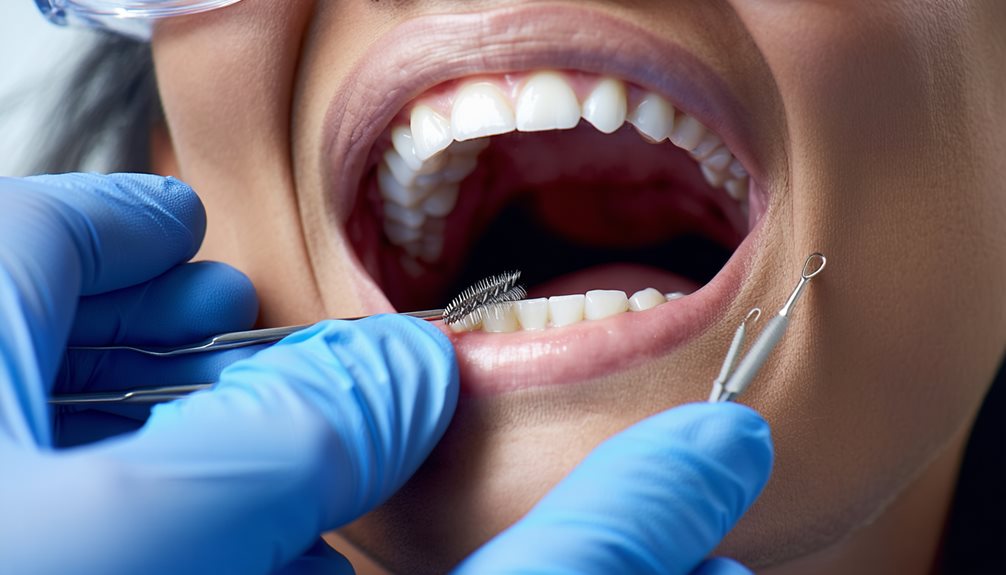
Minimally invasive endodontic techniques are transforming patient care with an emphasis on comfort and efficiency. Remarkable methods include Rotary Instrumentation and NiTi Files for enhanced precision. Ultrasonic Activation and the GentleWave Procedure guarantee thorough cleaning and disinfection. Laser-Assisted Therapy expedites healing, while Microscope Enhanced Techniques improve visibility and accuracy. Reciprocating Systems minimize instrument breakage, and Apex Locator Usage enhances procedural accuracy. Bioceramic Sealers offer effective sealing with biocompatibility. These advances align with a patient-centered approach by using cutting-edge technologies and materials, securing successful outcomes. Explore these innovations to discover how they redefine endodontic procedures and patient experience.
Rotary Instrumentation
Rotary instrumentation represents a pivotal advancement in the field of minimally invasive endodontics, enhancing both efficiency and precision in root canal therapy. By utilizing rotary file types, practitioners can achieve more consistent outcomes, reducing the potential for procedural errors.
These files, typically crafted from nickel-titanium alloy, offer superior flexibility and durability, allowing them to navigate complex root canal anatomies with ease. The integration of rotary handpieces further optimizes the process, providing controlled torque and speed, which is essential for maintaining the structural integrity of the tooth.
The use of diverse rotary file types enables clinicians to tailor their approach to the specific needs of each case. For instance, varying taper designs and cutting-edge configurations cater to different canal shapes and sizes, facilitating effective debris removal and canal shaping with minimal tooth structure removal.
This patient-centered approach not only preserves natural tooth strength but also reduces post-operative discomfort and recovery time.
In essence, the innovation introduced by rotary instrumentation in endodontics underscores a commitment to advancing patient care. As technology continues to evolve, the precision and reliability offered by rotary file systems and handpieces will further redefine the standards of endodontic success.
Apex Locator Usage
While rotary instrumentation has considerably improved the precision of root canal shaping, achieving accurate working length determination remains equally essential for successful endodontic therapy. Apex locators, with their advanced electronic technology, offer an innovative solution to determine the precise apical constriction.
These devices enhance apex locator accuracy, greatly reducing the reliance on radiographs, thereby minimizing radiation exposure for patients. Apex locator benefits extend to increasing the predictability of treatment outcomes and preserving tooth structure by preventing over-instrumentation.
Professionals in the field recognize the importance of integrating apex locators into their practice for several compelling reasons:
- Enhanced Precision: Achieve unparalleled accuracy in working length determination, leading to successful endodontic outcomes.
- Reduced Radiation: Minimize the need for excessive radiographic evaluations, promoting patient safety.
- Time Efficiency: Streamline the endodontic procedure, allowing for a more efficient workflow.
- Patient Comfort: Enhance the overall patient experience by reducing procedural discomfort and anxiety.
- Long-term Success: Improve the longevity of the treated tooth, contributing to sustained oral health.
Ultrasonic Activation
Ultrasonic activation in endodontics markedly enhances debris removal and improves cleaning efficiency within the root canal system.
By employing high-frequency vibrations, ultrasonic instruments disrupt biofilm and facilitate the elimination of hard-to-reach pulp tissue, thereby optimizing canal debridement.
This technique not only promotes thorough disinfection but also aligns with patient-centered care by potentially reducing the need for more aggressive mechanical instrumentation.
Enhanced Debris Removal
A significant advancement in minimally invasive endodontic techniques is the enhanced debris removal achieved through ultrasonic activation. This innovative approach revolutionizes debris management by utilizing high-frequency sound waves to disrupt and dislodge debris within the root canal system.
The precise control over ultrasonic frequency allows clinicians to address complex debris composition, effectively removing organic and inorganic matter without compromising tooth structure integrity. Ultrasonic activation enhances the penetration of irrigants, ensuring thorough debridement and reducing the risk of post-treatment complications, thereby prioritizing patient outcomes.
The benefits of enhanced debris removal through ultrasonic activation are transformative:
- Reduced treatment time, minimizing patient discomfort and increasing procedural efficiency.
- Improved patient outcomes, leading to faster healing and increased satisfaction.
- Conservation of tooth structure, preserving the natural tooth and promoting long-term dental health.
- Enhanced precision, allowing for targeted debris removal and minimizing invasive interventions.
- Innovative technology, reflecting the forefront of dental advancements and commitment to progressive care.
Embracing ultrasonic activation in endodontics not only advances clinical practice but also reaffirms a commitment to patient-centered care, delivering superior results with minimal intervention.
As the field evolves, the integration of such techniques will redefine the standard of care, aligning with the aspirations of both practitioners and patients who yearn for cutting-edge solutions.
Improved Cleaning Efficiency
The integration of ultrasonic activation into endodontic procedures considerably enhances cleaning efficiency within the root canal system. This innovative technique utilizes high-frequency sound waves to agitate endodontic irrigants, thereby promoting advanced cleaning capabilities. By disrupting the biofilm and effectively removing debris from complex canal anatomies, ultrasonic activation surpasses traditional cleaning methods. The precision of this technique guarantees that even the most intricate canal spaces receive ideal disinfection, which is paramount in preventing endodontic failure.
Ultrasonic activation complements minimally invasive cleaning protocols by maximizing the action of irrigants such as sodium hypochlorite and EDTA. This synergy not only improves the penetration of irrigants into dentinal tubules but also facilitates the thorough removal of organic and inorganic debris.
The enhanced cleaning efficiency provided by ultrasonic activation is particularly beneficial for patients, as it contributes to higher success rates and reduces the likelihood of postoperative complications.
For practitioners committed to advancing their endodontic practice, incorporating ultrasonic activation represents a significant step toward achieving superior clinical outcomes. As the demand for minimally invasive techniques grows, the emphasis on improved cleaning efficiency through innovative technologies, such as ultrasonic activation, will continue to shape the future of endodontic care.
GentleWave Procedure
Frequently, the GentleWave Procedure is heralded as a groundbreaking advancement in endodontic therapy due to its efficacy in achieving thorough cleaning and disinfection of the root canal system. This innovative technique leverages a combination of fluid dynamics and acoustic energy to reach areas of the canal that are often inaccessible with traditional methods.
The GentleWave advantages include enhanced cleaning efficiency and reduced treatment times, resulting in improved patient experiences. In addition, it minimizes the need for excessive instrumentation, preserving more of the tooth structure, a critical aspect for long-term oral health.
Despite its numerous benefits, GentleWave limitations should be acknowledged. The procedure demands significant initial investment, which may not be feasible for all practices. Moreover, the technology requires specialized training to guarantee ideal results, posing a learning curve for practitioners new to the system.
To evoke emotion and highlight its impact:
- Revolutionizes patient experience with minimized discomfort
- Preserves natural tooth structure more effectively
- Reduces treatment time, enhancing clinic efficiency
- Delivers superior cleaning results, boosting patient satisfaction
- Expands potential for successful outcomes in complex cases
The GentleWave Procedure represents the frontier of modern endodontic care, embodying the future of minimally invasive dentistry.
NiTi Files
Building on the innovative strides seen in the GentleWave Procedure, NiTi files play a pivotal role in modern endodontic practices, offering exceptional flexibility and strength.
Nickel-titanium (NiTi) files have revolutionized root canal therapy by enabling clinicians to navigate complex canal anatomies with precision, minimizing procedural errors and preserving tooth structure. The intrinsic flexibility of NiTi files allows them to adapt to the natural curvature of root canals, greatly reducing the risk of canal transportation or perforation. This attribute is particularly beneficial in achieving thorough debridement and shaping while maintaining the integrity of the original canal path.
The NiTi advantages extend to enhanced patient outcomes and procedural efficiency. The superelastic properties of NiTi alloys facilitate their movement within the canal system with minimal instrument fatigue and breakage, ensuring consistent performance throughout the treatment.
Additionally, the ability of NiTi files to maintain their original shape after deformation contributes to their longevity and reliability in clinical settings. The integration of NiTi files into endodontic practice underscores a commitment to minimally invasive techniques, prioritizing patient comfort and long-term oral health.
As the field advances, the continuous refinement of NiTi technology remains central to the pursuit of excellence in endodontic care.
Cone Beam CT Imaging
Cone Beam CT imaging stands as a transformative tool in modern endodontics, offering unparalleled precision in diagnosing complex dental anatomies. This cutting-edge technology provides three-dimensional images that facilitate the identification of intricate root canal systems, periapical pathology, and other anomalies that traditional two-dimensional radiographs might overlook.
With its focus on radiation safety, Cone Beam CT utilizes a lower dose compared to conventional CT scans, aligning with the ALARA (As Low As Reasonably Achievable) principle to minimize patient exposure while maximizing diagnostic information.
The diagnostic advancements presented by Cone Beam CT imaging empower clinicians to make informed decisions, enhancing treatment outcomes and patient satisfaction. By offering an all-encompassing view of the dental structures, this technology supports a minimally invasive approach, reducing the need for exploratory procedures and promoting quicker, more precise interventions.
- Uncover hidden complexities****: Revel in the clarity that reveals even the most elusive structures.
- Enhance patient comfort****: Less invasive diagnostics lead to quicker recoveries.
- Commit to safety: Opt for advanced imaging with minimized radiation exposure.
- Elevate clinical outcomes****: Make informed decisions backed by detailed visualization.
- Embrace innovation: Stay at the forefront of endodontic care with state-of-the-art technology.
Incorporating Cone Beam CT imaging into endodontic practice signifies a commitment to excellence, patient care, and the pursuit of innovation.
Bioceramic Sealers
In the domain of modern endodontics, bioceramic sealers have emerged as a pivotal component in achieving reliable and durable root canal obturations. These sealers, characterized by their bioceramic properties, offer a unique blend of bioactivity, biocompatibility, and sealing ability, which are critical for successful endodontic outcomes.
Their inorganic composition, primarily based on calcium silicate, facilitates the formation of hydroxyapatite upon setting, promoting a biologically favorable environment conducive to periapical healing.
Bioceramic applications in endodontics address the need for materials that adapt seamlessly to the dentinal walls, minimizing microleakage and enhancing the integrity of the seal. These sealers exhibit superior dimensional stability, ensuring that the seal remains intact over time, reducing the likelihood of reinfection.
Additionally, the hydrophilic nature of bioceramic sealers enhances their interaction with moisture in the root canal system, allowing for effective obturation even in challenging clinical scenarios.
For patients, the use of bioceramic sealers translates to a higher success rate of root canal treatments, reduced postoperative complications, and improved long-term outcomes.
As a practitioner committed to innovation, adopting bioceramic sealers aligns with the pursuit of excellence and patient-centered care in endodontic therapy.
Laser-Assisted Therapy
Laser-assisted therapy represents a precise modality in root canal treatment, offering enhanced accuracy in debridement and disinfection.
This approach considerably reduces postoperative pain by targeting infected tissues with minimal collateral damage, thereby prioritizing patient comfort.
Additionally, the use of lasers promotes an accelerated healing process by stimulating cellular regeneration and reducing inflammation.
Precision in Root Canal
Root canal therapy has undergone significant advancements with the introduction of laser-assisted techniques, which enhance precision and efficacy. This innovative method allows for meticulous navigation within the complex root anatomy, facilitating precise treatment planning.
By utilizing laser technology, endodontists can achieve unparalleled accuracy in removing infected tissue and bacteria while preserving the integrity of the tooth structure.
Laser technology offers several benefits that resonate with both clinicians and patients who prioritize cutting-edge solutions:
- Enhanced Visualization: Lasers provide clear visualization of the root canal system, ensuring thorough cleaning and shaping.
- Minimized Tissue Damage**: The focused nature of laser energy reduces collateral damage, preserving healthy tissues**.
- Improved Sterilization: High-energy laser beams effectively sterilize the canal, reducing the likelihood of reinfection.
- Efficiency: Laser-assisted procedures are often quicker, decreasing chair time and increasing patient comfort.
- Precision: The ability to precisely target and remove infected areas without affecting surrounding healthy tissue.
Reduced Post-Op Pain
The advent of laser-assisted techniques in endodontics not only enhances precision but also greatly mitigates postoperative discomfort for patients. This innovative approach leverages the unique properties of lasers to achieve superior debridement and disinfection of root canals, effectively reducing bacterial loads that are often responsible for postoperative inflammation and pain. Consequently, this technology plays a pivotal role in advancing patient comfort by minimizing the need for mechanical instrumentation, which can be more traumatic to the periapical tissues.
Laser-assisted therapy operates on the principle of selective photo-thermal and photo-acoustic effects, which precisely target infected tissues while preserving surrounding structures. This targeted action not only guarantees thorough cleaning but also markedly contributes to pain management by decreasing the inflammatory response that follows conventional endodontic procedures. Patients benefit from reduced reliance on analgesics, promoting a quicker return to normal activities.
Furthermore, the integration of laser technology into endodontic practice reflects a paradigm shift towards patient-centered care. By prioritizing patient comfort and reducing recovery times, laser-assisted therapy aligns with the contemporary emphasis on minimally invasive techniques. In this way, it represents a notable stride in the relentless pursuit of enhancing the patient experience in dental care.
Enhanced Healing Process
Although traditional endodontic approaches have long been effective, the integration of laser-assisted therapy has markedly accelerated the healing process in dental treatments.
This innovative technique leverages the precision of laser technology to enhance biological healing and promote tissue regeneration. By targeting affected areas with focused light energy, laser-assisted therapy stimulates cellular activity and accelerates recovery, reducing the overall treatment time.
The adoption of laser-assisted techniques in endodontic procedures offers significant advantages. Patients experience minimal discomfort, as the targeted nature of the laser minimizes collateral tissue damage.
Additionally, the bactericidal properties of lasers reduce the microbial load within the root canal system, thereby supporting the body’s natural healing mechanisms.
Benefits of Laser-Assisted Therapy evoke enthusiasm among both practitioners and patients:
- Accelerated Recovery: Patients return to normal activities sooner, enhancing their quality of life.
- Enhanced Comfort: Reduced post-operative sensitivity and inflammation.
- Precision: Targeted treatment minimizes damage to surrounding tissues.
- Improved Outcomes: Enhanced biological healing and tissue regeneration.
- Advanced Technology: Embracing cutting-edge solutions for superior patient care.
Reciprocating Systems
Reciprocating systems, a cornerstone in modern endodontic procedures, offer a significant advancement in root canal therapy by enhancing efficiency and patient outcomes. Utilizing a reciprocating motion, these systems improve the mechanical debridement of the root canal space, minimizing the risk of instrument breakage—a common concern in traditional rotary methods.
This alternating motion allows for more controlled and effective navigation through intricate canal anatomies, reducing procedural errors and fostering a more predictable treatment process.
The innovation of reciprocating systems lies in their ability to combine precision with safety, addressing the critical issue of instrument breakage that can compromise treatment success. By employing a back-and-forth motion, these systems distribute stress more evenly across the file, mitigating the wear and tear typically associated with continuous rotation.
This not only extends the lifespan of the instruments but also enhances patient safety by minimizing the likelihood of procedural mishaps.
From a patient-centered perspective, the use of reciprocating systems translates into shorter treatment times and reduced chairside fatigue, contributing to a more comfortable experience.
As endodontic technology continues to evolve, reciprocating systems remain a pivotal component, reflecting a commitment to innovative, minimally invasive approaches in dental care.
Microscope Enhanced Techniques
Microscope enhanced techniques in endodontics markedly improve precision and accuracy by allowing clinicians to visualize intricate root canal anatomy with unparalleled detail.
This enhanced visibility and access facilitate the effective removal of pathologic tissue while preserving healthy tooth structure, thereby aligning with the principles of minimally invasive dentistry.
Additionally, the use of microscopes can reduce operative time, contributing to increased patient comfort and efficiency in clinical practice.
Improved Precision and Accuracy
In the domain of minimally invasive endodontics, the utilization of advanced microscope-enhanced techniques has markedly elevated the precision and accuracy of dental procedures. By integrating precision techniques, clinicians are able to perform endodontic treatments with unparalleled accuracy improvements.
These microscopes allow for meticulous navigation through the complex root canal system, ensuring that the removal of infected tissue is both complete and conservative, preserving as much of the natural tooth structure as possible. This patient-centered approach minimizes postoperative complications and enhances long-term outcomes.
Microscope-enhanced procedures have revolutionized the standard of care, providing several compelling benefits:
- Increased Confidence: Patients can rest assured knowing that their treatments are executed with state-of-the-art precision.
- Enhanced Patient Comfort: Reduced invasiveness results in less discomfort and quicker recovery times.
- Preservation of Natural Tooth Structure: Advanced accuracy reduces the need for extensive tooth alteration.
- Higher Success Rates: Exceptional precision leads to improved treatment outcomes and longevity.
- Personalized Care: Tailored treatment plans are facilitated by precise imaging and magnification.
The fusion of cutting-edge technology with expert clinical skills underscores the transformative potential of microscope-enhanced techniques.
As dental professionals continue to embrace these innovations, the future of endodontics promises even greater advancements in patient care and treatment success.
Enhanced Visibility and Access
For dental professionals, the advent of microscope-enhanced techniques has greatly improved visibility and access during endodontic procedures. The integration of advanced optics and magnification allows clinicians to identify intricate anatomical details that are otherwise challenging to discern with the naked eye. Such precision is essential in maneuvering complex root canal systems, reducing the likelihood of procedural errors.
Enhanced illumination techniques additionally augment the benefits of microscopic systems, guaranteeing the operative field is ideally lit, thereby reducing eye strain and improving diagnostic efficacy. These techniques facilitate the identification of microfractures and calcified canals, significant for thorough debridement and successful treatment outcomes.
Moreover, precise lighting conditions empower endodontists to work with heightened confidence and accuracy, directly impacting patient satisfaction and treatment longevity.
Ideal patient positioning is another key factor in achieving enhanced visibility and access. Adjustable chairs and ergonomic configurations allow for better alignment of the patient’s oral cavity with the clinician’s line of sight. This alignment minimizes the need for awkward postures, thereby reducing fatigue and promoting sustained focus during lengthy procedures.
Reduced Operative Time
Building on the improved visibility and access provided by microscope-enhanced techniques, these advancements also contribute to a reduction in operative time during endodontic procedures.
The precision afforded by the microscope guarantees that clinicians can swiftly identify and address the complexities within the root canal system. This enhanced capability facilitates superior time management, allowing practitioners to perform intricate procedures with increased efficiency. Consequently, there is a significant improvement in patient comfort, as reduced operative time decreases the duration that patients spend in the dental chair.
Incorporating microscope-enhanced techniques into endodontic practice yields several advantages that resonate with both patients and practitioners:
- Swift completion of procedures, minimizing patient anxiety and discomfort.
- Enhanced accuracy and precision, reducing the likelihood of procedural errors.
- Improved visual acuity****, enabling the identification of complex anatomical structures.
- Streamlined workflow, optimizing the use of clinic time and resources.
- Elevated patient satisfaction, through efficient and effective treatment delivery.
These benefits underscore the importance of embracing innovative technologies in endodontics.
Frequently Asked Questions
What Are the Benefits of Minimally Invasive Endodontic Techniques for Patient Recovery?
Minimally invasive endodontic techniques enhance patient comfort by reducing operative trauma. This leads to decreased postoperative discomfort and markedly shortens recovery time. Such approaches prioritize tissue preservation, promoting rapid healing and fostering improved long-term oral health outcomes for patients.
How Do Minimally Invasive Techniques Impact the Longevity of Dental Restorations?
Minimally invasive techniques enhance restoration durability by preserving tooth structure, thereby optimizing technique effectiveness. This approach supports longer-lasting dental restorations, aligning with patient-centered care and innovation, ultimately improving outcomes and extending the longevity of dental treatments.
Can These Endodontic Techniques Be Used for Pediatric Patients?
Minimally invasive endodontic techniques can be adapted for pediatric patients, necessitating careful pediatric considerations to optimize treatment outcomes. Emphasizing preservation of tooth structure and minimizing discomfort guarantees enhanced procedural efficiency and improved long-term dental health for younger populations.
What Is the Average Cost Difference Between Traditional and Minimally Invasive Endodontic Procedures?
The cost comparison of traditional versus minimally invasive endodontic procedures reveals a potential increase in treatment affordability. Minimally invasive techniques may offer long-term cost efficiency, although initial expenses could be higher due to advanced technologies utilized.
How Do Patients Typically Perceive the Pain Levels Associated With Minimally Invasive Techniques?
Patient feedback indicates that pain perception associated with minimally invasive techniques is generally lower compared to traditional methods. Patients report enhanced comfort and quicker recovery, suggesting these innovative procedures align with a patient-centered approach in modern endodontic care.
Conclusion
In summary, minimally invasive endodontic techniques represent a significant advancement in dental care, emphasizing precision, efficiency, and patient comfort. The integration of technologies such as rotary instrumentation, apex locators, and ultrasonic activation enhances the accuracy of procedures. Techniques like the GentleWave procedure and the use of NiTi files and bioceramic sealers guarantee ideal outcomes. Additionally, laser-assisted therapy and reciprocating systems further refine treatment approaches. Microscope-enhanced techniques augment visualization, collectively contributing to improved patient experiences and treatment efficacy in endodontics.
